

Originally published on travelandleisure.com by Lucy Gillmore
Stirred Travel’s culinary experiences let you rub elbows with Europe’s hottest chefs in extraordinary locations.
Imagine having dinner at one of the hottest restaurants in town—and then packing your bags and going on holiday with the chef. There’s no shortage of far-flung culinary holidays out there, but Stirred Travel raises the bar with one key ingredient: a star chef.
Its evolving program of food-focused holidays in France, Italy, Spain, and Portugal has been redefining the culinary escape with its recipe of immersive cooking sessions, artisanal producer tastings, and cultural activities, all in magical locations. The gastronomic house-parties are held in a honey-tinged 18th-century bastide in Provence, a fresco-adorned 15th-century villa just outside Venice, and a historic hacienda in Andalucia, with time spent browsing local markets and cooking and chatting with a chef famous for the host country’s cuisine.
In France you might be chopping onions with Henry Harris, the chef at the center of a renaissance in French cuisine in London. (Harris’s take on the classic bistro, Bouchon Racine, has been hailed by one critic as London’s best restaurant.) In Portugal, it’s chef Leandro (Leo) Carreira, who has headed up restaurants from the Middle East to London, where he was consultant at fashionable dining spot Luso before launching one of Lisbon’s hippest eateries, Barbela, a year ago. He’s also written a definitive tome on Portuguese cuisine, Portugal: The Cookbook.
One balmy evening in London I found myself tucking into amêijoas à bulhão pato (clams with garlic and coriander), crispy aubergine with smoked butter and leitão slow-roasted Iberian suckling pig, and mulling over how to recreate the dishes at home. Not long after, I was driving through the Alentejo’s sun-seared landscape to a lavishly restored monastery surrounded by shimmering olive groves and citrus orchards to learn how.
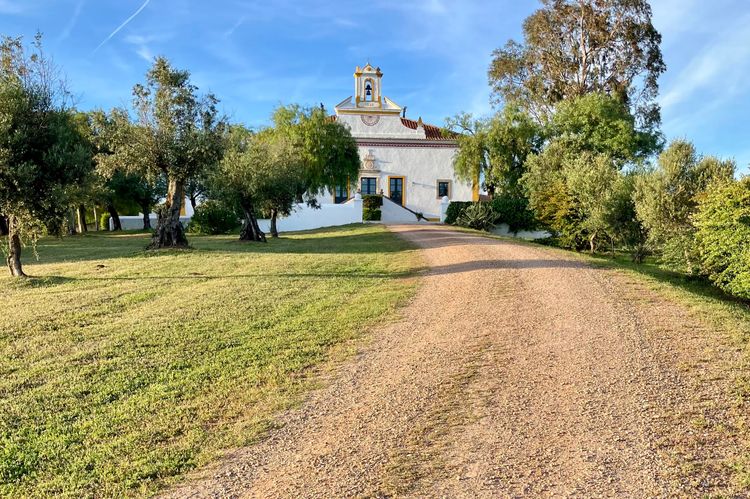
Castelo Ventoso is up a long dirt track fringed with cork trees. An impossibly picturesque property, surrounded by a 300-hectare regenerative estate, it was once home to an order of Jesuits. It is now owned by a Dutch couple, Vicky and Hein Van Beuningen, who have lovingly transformed the old house, retaining original features including the tiny Baroque chapel, incorporating a striking 18th-century panel of Portuguese azuelejos tiles in the drawing room, and adding an architect-designed, state-of-the-art glass-fronted kitchen and dreamy infinity pool.
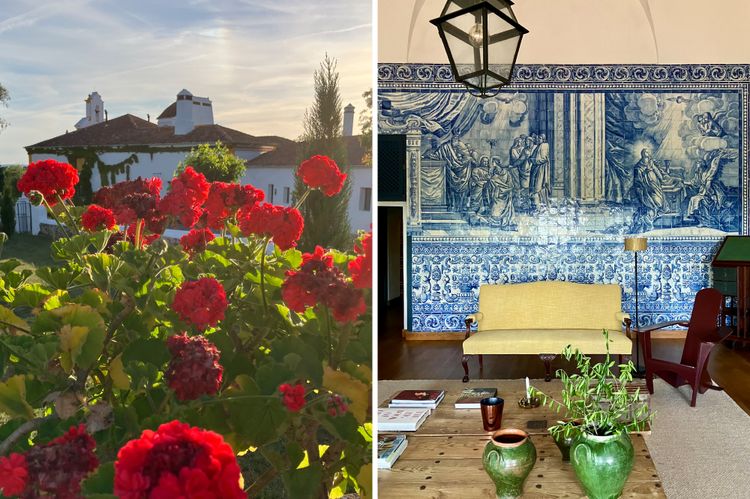
The couple run wellbeing retreats here, and let the house as a luxury holiday home and glamorous fashion shoot location, while Hein manages the estate. They have around a thousand olive trees and press their own olive oil, and have planted thousands of native cork trees, Hein tells us as he gives us a tour, talking sustainability, biodiversity, and soil health. Between October and February, black Iberian pigs feast on the acorns beneath the trees; in the spring, sheep are shipped in to graze.
It’s a pinch-yourself setting for a week learning about the Alentejo’s culinary heritage. On the first morning, we donned aprons and clustered around the large kitchen island to filet fish for a bream crudo.
“In Japan they never throw away the collar,” Carreira tells us, expertly removing it. “Some restaurants specialise in collar or ‘kama’. It’s the fattiest part of the fish. It has texture, collagen and flavor.”
He had just returned from a trip to Japan and showed us another technique, yubiki, blanching the fish in hot water then cold, which softens the skin so you can eat it. It melts in the mouth.
Others in the group sliced eggplants. “Texture is sometimes more important than flavor,” he told us. The sliced eggplant was pressed to remove the liquid, creating drier steaks to fry. The leftover liquid was syrupy. “We’ll emulsify it with a bit of butter to create a sauce.”
After the morning’s hands-on cookery class, we moved to the shaded terrace to tuck into the dishes we’d made for lunch, washed down with chilled local wines.
The program was perfectly pitched: three mornings of cooking—if you’re keen you can help with the evening meals as well—and excursions and tastings in between. After meandering the whitewashed medieval hilltop village of Monsaraz, we lunched at a local restaurant with wide-angle views over a lake. A renowned local fish restaurant, Delgado’s, was the lunch spot after a guided tour of the Unesco World Heritage city of Evora. Added to the mix were pottery workshops and artisan weavers, the traditional hand looms clattering away.
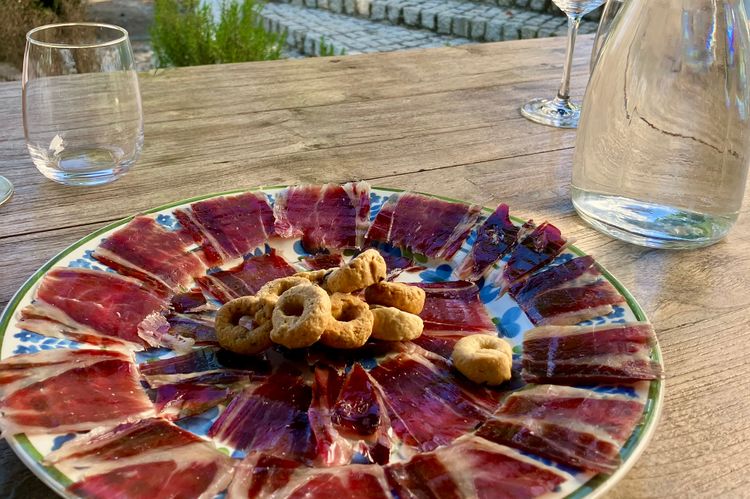
Back at the castelo, beneath the trees, Rita Tenreiro and Henrique Jardim handed around platters of presunto de porco preto as we taste wine produced on their small eight-hectare family farm. Anta de Cima’s Rosa d’Argilla (pink clay) is a chilled red, fermented in clay amphorae, light and fresh with an acidity that goes well with the rich, nutty, marbled ham from the small black pigs which graze among the vines.
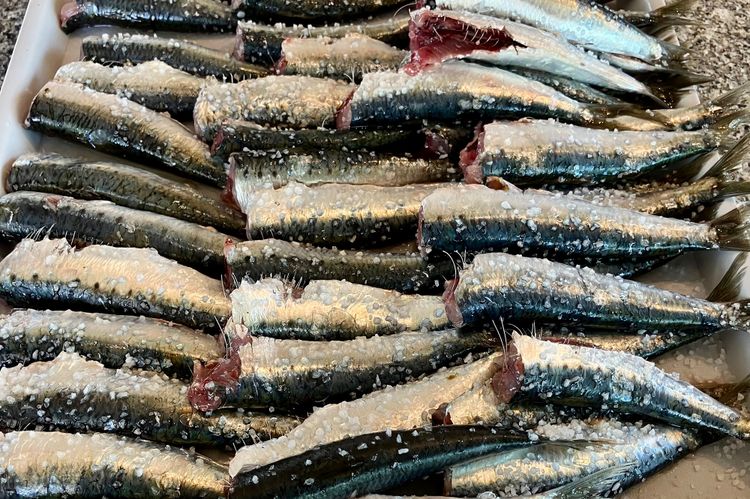
Along with the hands-on sessions, we had a demonstration of how to make pasteis de nata, Portugal’s legendary custard tarts. And we learned plenty of tips: use bay leaf branches as skewers, removing the bark and soaking them so they don’t burn on the barbecue. We learned how to debone a sardine with our thumbs and make a traditional cuttlefish dish. “Cuttlefish should be medium rare; if you overcook it, it’ll be tough.”
Many of the group have been on Stirred Travel’s trips before, greeting each other like old friends and reminiscing about the exquisite dishes and refined sauces they had created.
In Portugal, however, Carreira explained, “fancy would not be fitting. That’s not why you’re here: it’s to observe the simpler life.”
Dining at a long, communal table on the terrace, gazing out over a sea of cork trees, the simple life seemed incredibly rich.
